Legal AI isn’t new, but in 2025 the tools that stand out are those built for legal teams, not just trained on legal data. What sets this new generation apart is that they don’t just process documents – they follow real legal workflows end to end. From research and drafting to review and audit, modern AI agents replicate the way lawyers and in-house teams actually work.
AI is no longer a side tool, it’s part of the legal process itself. It reduces risk, increases accuracy, and helps teams deliver higher-quality work under growing client and market pressure.
Here’s our ranking of the top 5 legal AI tools for 2025, based on accuracy, usability, compliance, and ROI.
The legal sector faces more pressure than ever to deliver faster, data-driven, and cost-efficient services while maintaining precision. Clients expect immediate answers and flawless execution. AI adoption is already widespread across industries, and legal teams are rapidly catching up.
Here’s why AI agents are now indispensable:
Time savings: Automates research, drafting, and review so lawyers can focus on strategy.
Accuracy and risk reduction: Detects risky clauses, inconsistencies, and policy breaches early.
Quality assurance: Produces consistent, reliable work across all documents.
Client value: Streamlined processes mean faster turnaround times and stronger outcomes.
Each platform in this ranking was evaluated for:
Accuracy and reliability
Data privacy and compliance
Workflow integration
Ease of use and learning curve
Pricing and accessibility
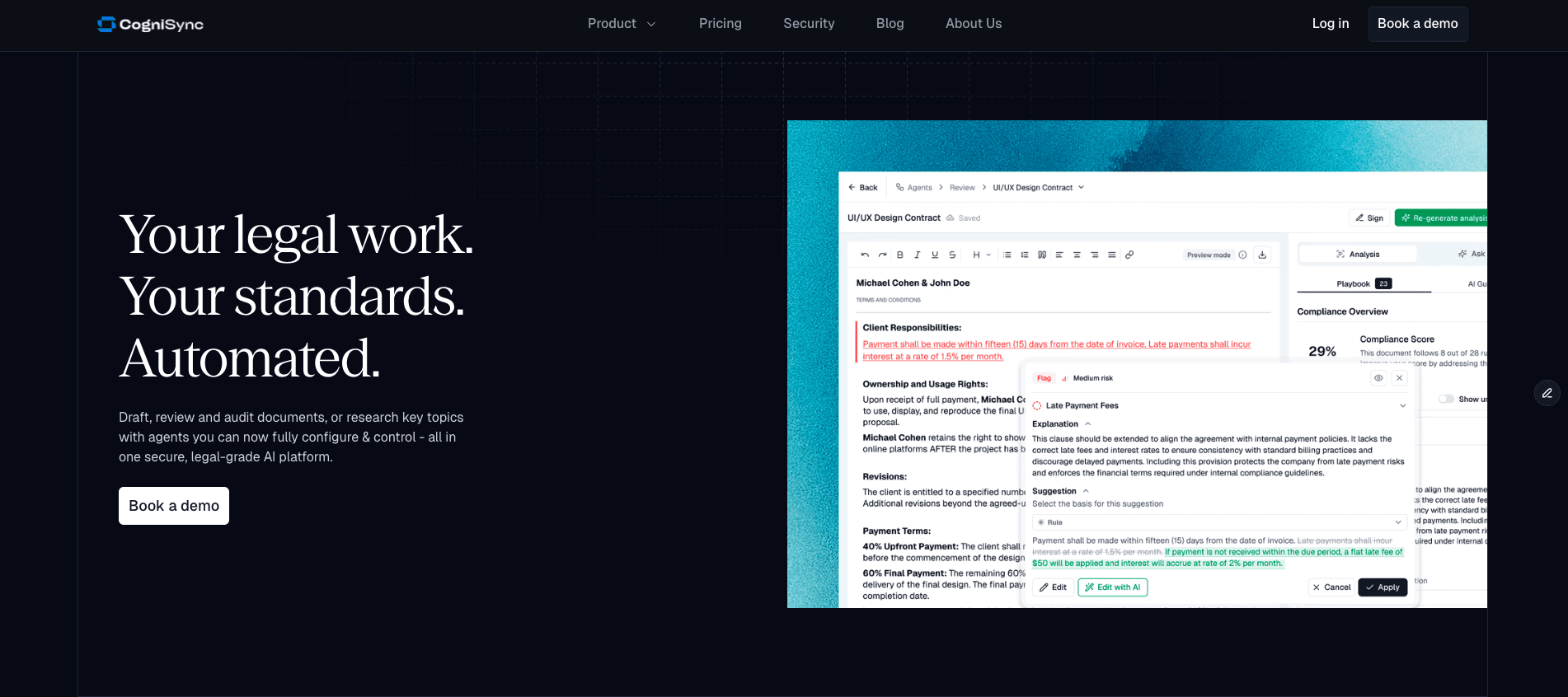
CogniSync leads this year’s list as the most complete and workflow-focused AI workspace built for law firms and in-house legal teams. Unlike many chat-based tools, CogniSync uses specialized AI agents that follow structured legal workflows to deliver accurate, high-quality results backed by expert review.
Key Features:
Guaranteed quality output through a built-in human-in-the-loop system, ensuring every AI-generated draft or review meets professional legal standards.
Unified workspace that combines research, drafting, review, and audit into one seamless platform.
Automatic playbook and template extraction from existing firm documents, with the option to create them manually.
SOC 2 Type II-certified and GDPR-compliant infrastructure for complete data protection.
Central Document Repository (launching soon) to store and manage all firm content securely.
Strengths:
Quality-first system that blends automation with human expertise.
Easy-to-use interface designed for both technical and non-technical users.
Affordable pricing that makes enterprise-grade AI accessible.
Significantly reduces drafting and review time while maintaining accuracy.
Best For:
Legal teams seeking a full-scale AI workspace that produces reliable, high-quality results while maintaining compliance and control.
Why #1:
CogniSync’s human-in-the-loop design ensures that every output is dependable and review-ready – a level of quality few AI agents achieve. It’s the most balanced, trustworthy, and effective legal AI solution available in 2025.
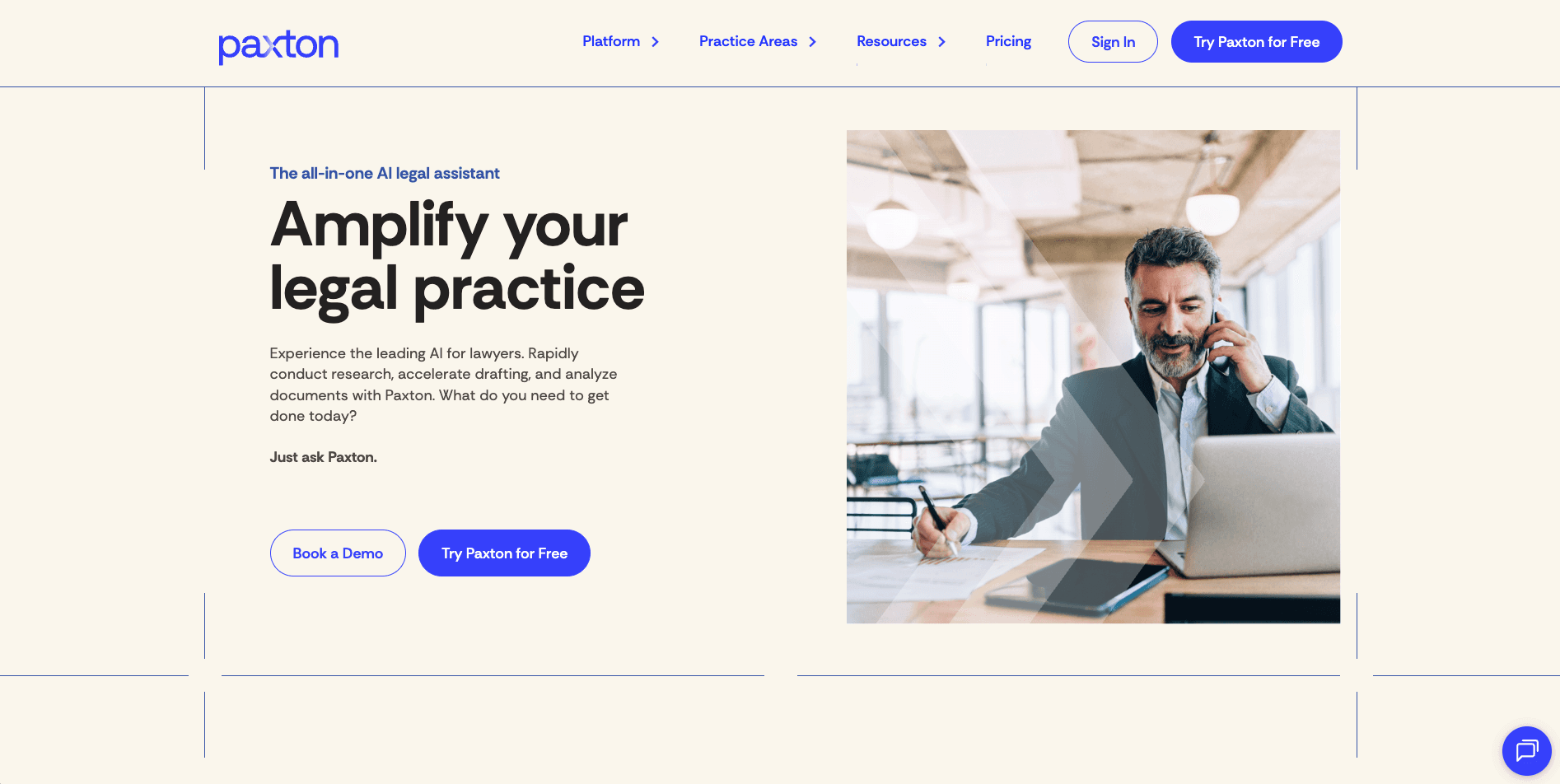
Paxton AI is a newer entrant that offers document drafting, review, and research tools within a chat-based interface. It’s intuitive and well-priced, but operates more like a conversational AI agent than a structured workflow platform.
Key Features:
Drafting and research modules with real-time citation retrieval.
Document analysis and question-answering capabilities.
Security certifications including SOC 2, ISO, and HIPAA.
Strengths:
Affordable and simple to adopt for small legal teams.
Effective for generating quick insights and first-draft content.
Weakness:
Operates as a chat-based AI agent, which limits workflow depth and precision.
Lacks the process-driven flow and quality assurance features of larger platforms.
Best For:
Solo practitioners or boutique firms looking for a cost-effective AI agent for quick drafting and research, not full workflow automation.
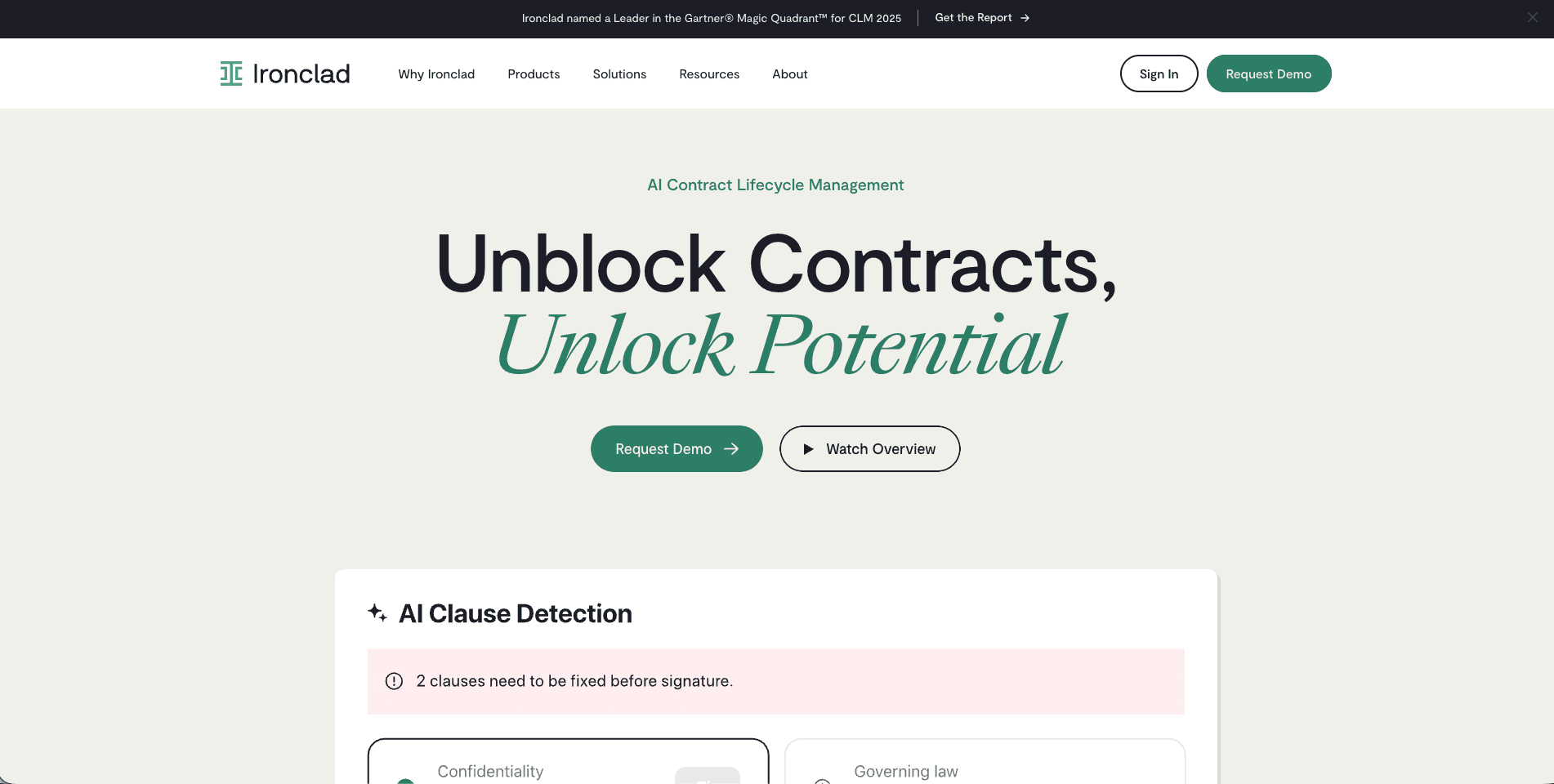
Ironclad is a contract lifecycle management (CLM) platform that has evolved to include AI features for redlining, clause analysis, and workflow automation.
Key Features:
AI-powered contract review and risk identification.
Workflow automation for contract creation, negotiation, and approval.
Repository and analytics tools for contract tracking.
Strengths:
Excellent for large legal operations and high-volume contract management.
Trusted, enterprise-grade system recognized across the industry.
Weakness:
Legacy technology that may be less flexible and performant than newer AI-native tools.
Narrower scope, focused primarily on contracts rather than full legal flows.
Best For:
Enterprises and in-house legal operations teams seeking structured contract automation within a CLM environment.
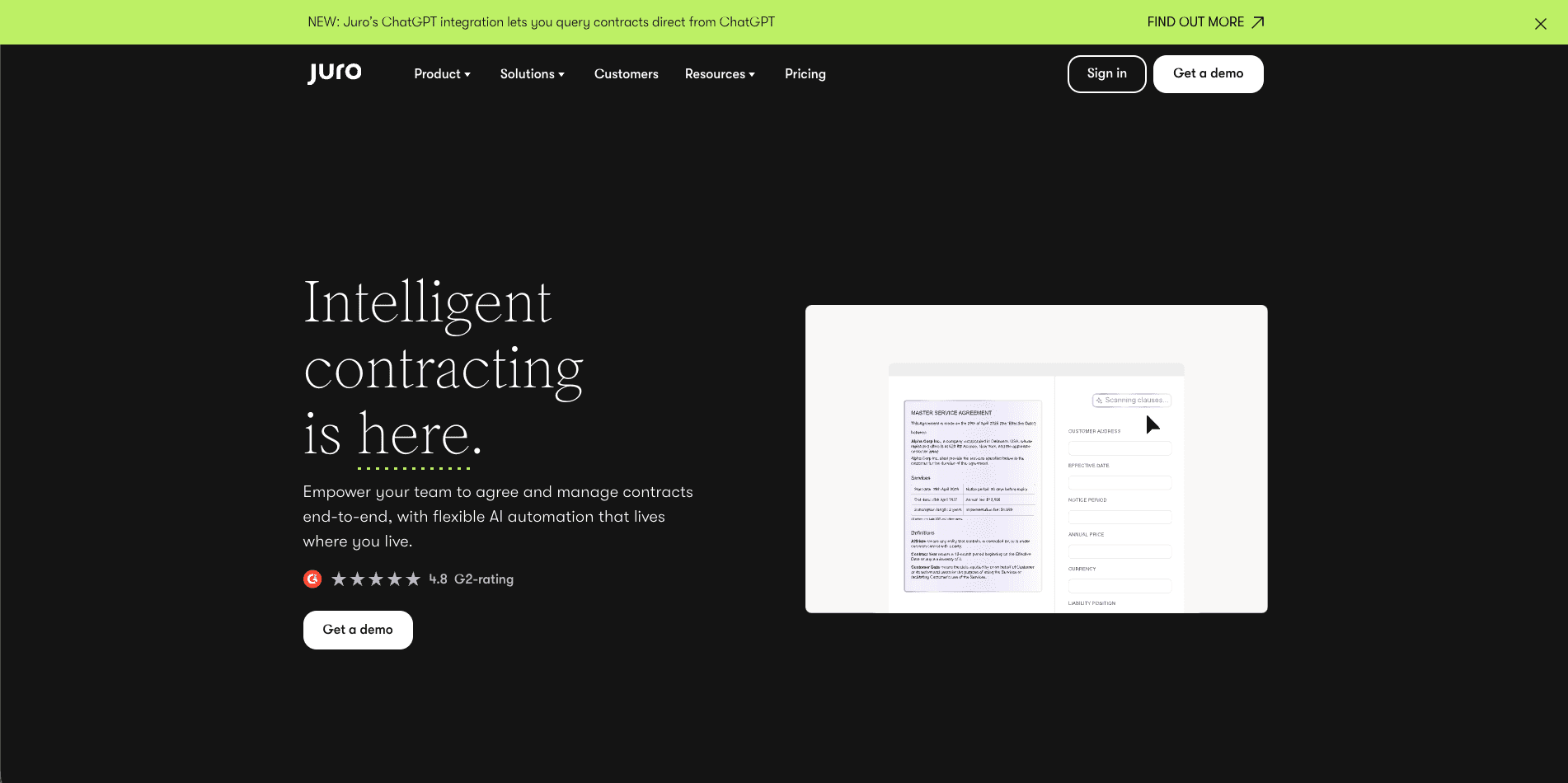
Juro AI is a user-friendly platform for automating contract creation, negotiation, and approval. Its focus lies in simplifying contract workflows rather than addressing broader legal functions like research or auditing.
Key Features:
AI-assisted contract generation, collaboration, and e-signature workflows.
Integrations with major tools including Slack, Salesforce, and Google Workspace.
Repository and version-control system for document management.
Strengths:
Smooth end-to-end contract process for growing in-house teams.
Good collaboration tools and visual workflows.
Weakness:
Primarily contract-lifecycle focused, so it doesn’t extend into wider legal processes such as review or audit.
Best For:
Legal departments focused on contract standardization and lifecycle management.
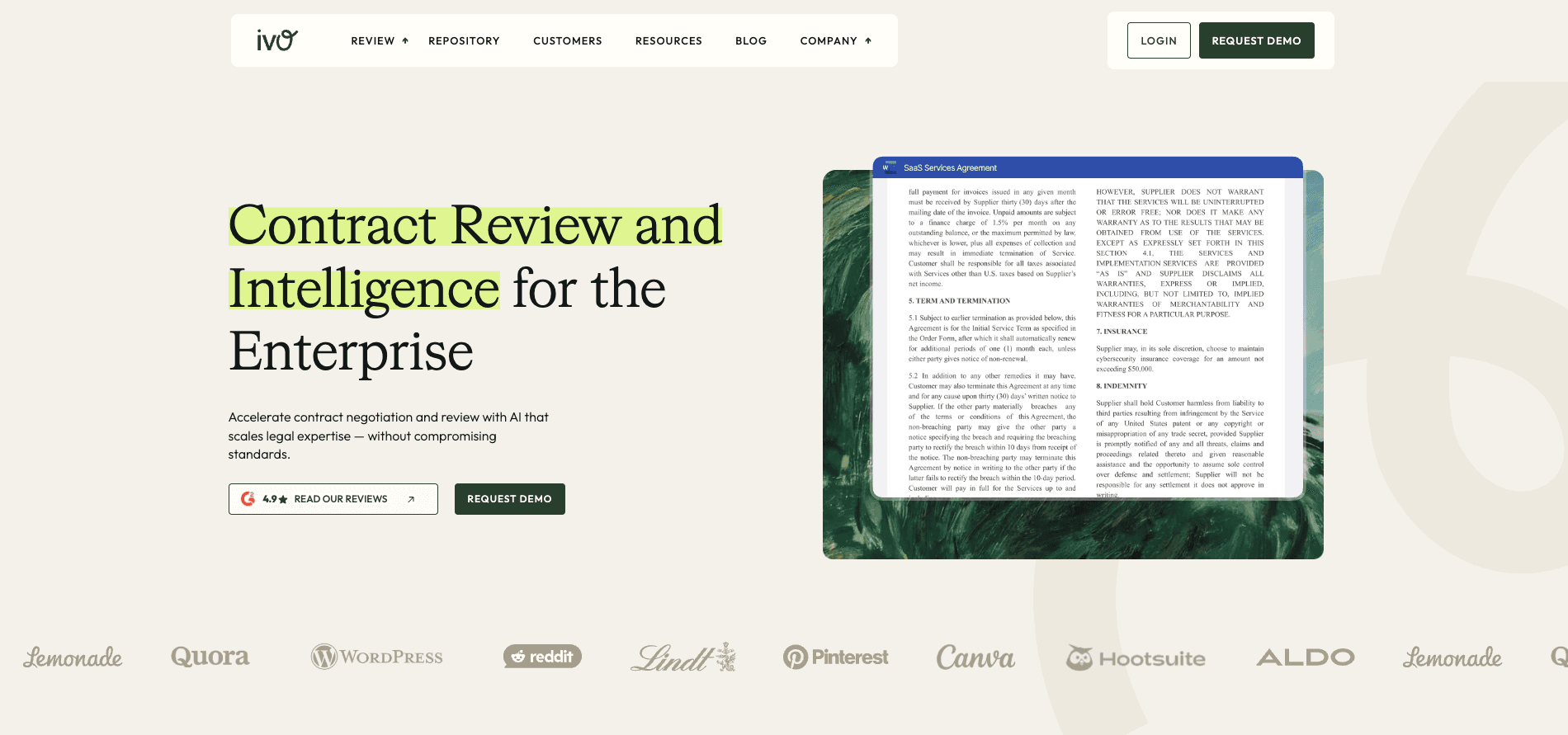
Ivo AI focuses on automating contract review and redlining through playbook-based logic, helping firms review large document volumes faster.
Key Features:
Configurable playbooks for clause comparison, risk flagging, and redlining.
Repository and search functions for managing high-volume contracts.
Claims of up to 75% faster review times compared to manual processes.
Strengths:
Excellent for repetitive contract review workflows.
Clear, functional interface with strong focus on speed.
Weakness:
Missing drafting functionality and unable to cover the broader legal flow.
Narrowly focused on review and playbook automation.
Best For:
Teams handling repetitive contract reviews that need efficiency improvements without broader workflow integration.
As legal teams embrace AI, the focus has shifted from experimentation to execution. The best tools in 2025 aren’t those that just generate content – they integrate seamlessly into legal workflows, enforce standards, and deliver outputs that meet professional expectations.
While Paxton, Ironclad, Juro, and Ivo each offer valuable niche solutions, CogniSync leads the pack by combining automation with expert oversight. Its human-in-the-loop system ensures every result meets the quality bar legal professionals demand – making it the most reliable and comprehensive AI workspace for legal teams in 2025.